

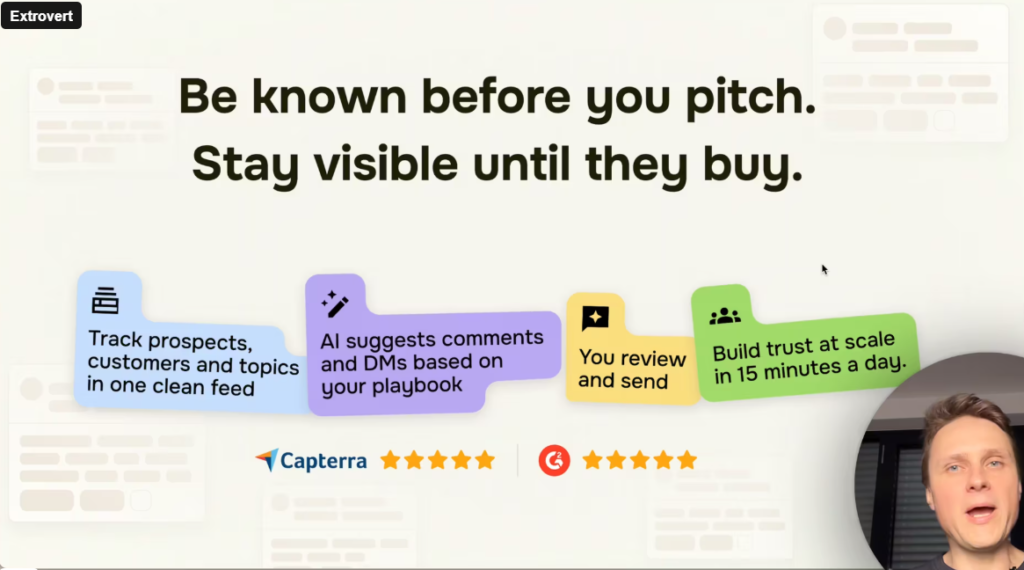
Let’s be honest: LinkedIn has become a graveyard of ignored “Cold DMs.” We’re all tired of strangers jumping into our inbox with a pitch before even saying hello.
The “Extrovert” approach flips the script. It’s not about being the loudest person in the room; it’s about being the most familiar. By creating consistent, meaningful visibility long before the “sell,” you’re not just another salesperson—you’re a recognized face. This guide will show you how to turn social dynamics and AI into a trust-building machine.
Defining the “Extrovert” Philosophy in Sales
The best sales happen when the prospect already feels like they know you. That’s the heart of the Extrovert philosophy. Instead of being an intrusive voice in a DM, with Extrovert you become a valuable presence in their daily feed. Think of it as “Sales through Osmosis.” By consistently showing up with expertise and authentic engagement via Extrovert, you’re building “trust credit” every day. When the time comes to finally talk business, the hard part—building credibility with Extrovert—is already done.
At its core, this approach transforms traditional sales from a transactional machine into a conversational, trust-building process. Sales professionals who adopt an Extrovert mindset tend to be more visible, approachable, and engaging across multiple touchpoints. They focus on consistent value delivery through Extrovert social interactions rather than waiting solely to make direct contact when a prospect is ready to buy. This shift not only improves conversion rates but also enhances the reputation of Extrovert users in competitive markets.
The Characteristics of Warm Outreach: Be Known Before You Pitch
Warm outreach isn’t a sprint; it’s about planting seeds with Extrovert. It’s that thoughtful comment on a prospect’s big win or a shared insight on their latest post.The goal? To make your name a welcome sight in their notifications. It takes patience, sure. It might take weeks or months. But when you finally reach out, you’re not a “cold lead”—you’re that person who always leaves great comments. That’s the unfair advantage of being known.
One critical characteristic of this approach is patience. Instead of immediate outreach with a sales message, warm outreach prioritizes becoming a recognized and trusted figure in a prospect’s network. Your efforts could take weeks or even months to bear fruit but will result in higher-quality conversations. Authenticity is key here: prospects can sense when interest is genuine, which increases the likelihood of meaningful engagement and long-term relationships.
Differentiating Extrovert from Traditional LinkedIn Automation
Many traditional LinkedIn automation tools focus on volume—sending out hundreds of connection requests without regard for relationship. This results in a “bot-like” appearance. In contrast, an Extrovert approach uses automation thoughtfully, emphasizing personalized, non-intrusive interactions. Instead of blindly automating outreach, the Extrovert method involves strategic use of AI to support genuine interaction.
Instead of blindly automating outreach, the extrovert method involves strategic use of AI and automation tools to support genuine interaction. For example, leveraging smart commenting features or AI-driven content curation helps maintain a consistent online presence without sacrificing authenticity. The goal is to blend technology with a human touch, fostering real conversations rather than superficial contacts, which is crucial for building trust in social selling.
The Origins of the “Stay Visible” Methodology
The “stay visible” methodology stems from the understanding that in a noisy digital environment, visibility equals credibility. Modern buyers often conduct extensive online research before engaging with a sales rep. By maintaining a consistent presence—through posting valuable insights, engaging with relevant communities, and commenting thoughtfully—sales professionals become top-of-mind when prospects are ready to make a decision.
This concept also draws from social psychology theories, emphasizing that familiarity enhances trust. When prospects repeatedly see your name or content across their feeds, they internalize your brand and associate it with authority and reliability. The challenge lies in balancing visibility with relevance—being consistently present without overwhelming your audience, which calls for smart, automated content strategies that leverage AI to identify the right moments and messages.
Common Misconceptions About Social Selling Tools
Despite their popularity, many sales teams misunderstand how to effectively leverage social selling tools. A common misconception is that automation alone can replace genuine human engagement, leading to superficial interactions that damage relationships. Another myth is that visibility alone guarantees sales; in reality, consistency and authenticity are what truly convert prospects into clients.
Effective use of social selling tools combines automation with a strategic mindset. For instance, tools that enable real-time engagement by suggesting thoughtful comments or personalized messages ensure that interactions are meaningful rather than mechanical. Recognizing the limits of automation, and pairing it with personal oversight, helps maintain a genuine voice while scaling outreach efforts.
Strategic Perspectives on Digital Familiarity
Building familiarity through digital channels is fundamental to the extrovert philosophy. The idea is that when prospects see your name, authorship, or participation consistently, they develop a sense of trust and connection. This psychological principle—known as “mere exposure effect”—is proven to influence decision-making in sales and marketing, making familiarity a powerful tool in converting prospects into loyal customers.
The Psychology of Trust: Why Familiar Faces Close More Deals
Trust is the cornerstone of any successful sales relationship, and digital interactions require deliberate cultivation of that trust through repeated, relevant engagement. When prospects encounter your content regularly, they begin to perceive you as a knowledgeable and dependable authority in your field.
In practice, building trust through digital familiarity involves sharing insightful posts, participating in industry discussions, and responding genuinely to comments. Over time, these interactions foster a sense of relationship, reducing the perceived risk of doing business with you. This psychological connection often translates into increased willingness to consider your solutions when the time comes to buy.
Technical Foundations: How AI-Powered Commenting Mimics Human Thought
An emerging frontier in digital familiarity is the use of AI-powered commenting tools that help sales professionals engage thoughtfully and consistently. These tools analyze content, identify relevant topics, and generate comments that feel authentic and human-like.
For example, AI-driven comment generators can craft personalized responses that appear tailored to the post, mirroring the thought process of a knowledgeable industry expert. This technique allows sales teams to maintain high engagement levels without sacrificing quality or personalization, which are essential for fostering trust and credibility in social selling.
How Constant Visibility Influences the Modern Buyer’s Journey
Modern buyers conduct extensive research online and prefer to engage with brands and individuals they recognize and trust. Consistent visibility across multiple touchpoints—like LinkedIn posts, comments, and shared content—ensures your presence is felt early in their buyer journey.
This prolonged exposure helps keep your brand top of mind, which influences their decision when they’re ready to purchase. It also positions you as an industry thought leader, further easing the sales process by reducing the need for cold outreach or hard selling. Building this seamless visibility pipeline requires strategic planning and automation that aligns content, interactions, and timing.
Variability in Engagement: Tailoring Playbooks for Different Prospects
Not all prospects respond the same way; some prefer subtle engagement, while others may need more direct outreach. Developing flexible playbooks that adapt to various buyer personas and stages in their journey maximizes engagement efficacy.
This personalization involves understanding individual preferences for communication style, content consumption, and interaction frequency. Automation tools can assist in this realm by suggesting contextually relevant content or interactions based on prospect behavior. By tailoring your engagement strategy, you increase the chances of creating deeper relationships and ultimately closing more deals.
LinkedIn Dynamics and the Extrovert Ecosystem
LinkedIn remains the premier platform for engaging with professional audiences and implementing the extrovert philosophy. Its design encourages networking, thought leadership, and social proof—all vital for building familiarity and trust at scale.
Mastering the Art of Non-Intrusive Social Interactions
The key to successful social selling is making meaningful connections without coming across as pushy. Non-intrusive interactions—such as commenting, liking, or sharing—must be genuine and value-driven.
For example, leaving insightful comments on a prospect’s post shows that you’re paying attention and appreciate their insights, rather than just pushing your agenda. Over time, these small acts help develop a relationship that can naturally evolve into a sales conversation once the trust is established.
The Role of Thought Leadership in Group Settings and Feeds
Publishing thought leadership content positions you as an industry authority and encourages organic engagement from peers and prospects alike. Sharing valuable insights in groups or through personal posts raises your profile and invites conversation.
In this ecosystem, consistent content creation paired with active participation in discussions ensures your name remains familiar within your target community. Thought leadership also fosters goodwill that can lead to opportunities when prospects recognize your expertise and reach out proactively.
Communication Styles: Balancing AI Suggestions with Personal Voice
Effective social selling balances automation’s efficiency with your authentic voice. AI tools can suggest tailored comments or content ideas, but these must be customized to match your personal style to resonate genuinely.
Striking this balance involves reviewing AI-generated suggestions and adding your personal touch, ensuring that interactions reflect your voice and brand personality. This approach maintains authenticity, strengthens relationships, and leverages automation’s scalability without sacrificing connection quality.
Challenges of Scaling Personal Branding in High-Stakes B2B Contexts
Scaling personal branding efforts in complex B2B environments can be challenging, especially when individual credibility is crucial. It requires strategic content planning, consistent engagement, and an understanding of the industry’s nuances.
Automation can assist by scheduling posts, managing interactions, or even helping generate content ideas, but the human element remains vital. High-stakes contexts demand a delicate balance between efficiency and authenticity—making careful use of AI tools like LinkedIn automation can facilitate this process.
Benefits and Risks of LinkedIn Engagement Automation
While automation offers substantial advantages—like saving time and increasing reach—it comes with risks that must be managed diligently. When used thoughtfully, automation amplifies your presence and fosters relationships at scale.
Advantages in Professional Networking and Lead Generation
Automation can help you engage with a broader audience through scheduled posts, automatic connection requests, or comment suggestions, thus enhancing your visibility effortlessly. This increased activity often translates into higher lead generation rates, as more prospects encounter your brand repeatedly.
Additionally, automation tools integrated with platforms like HubSpot can streamline lead management, tagging, and follow-up sequences—ensuring no opportunity slips through the cracks.
Potential Downsides: Avoiding the “Bot-Like” Appearance
Over-automation can lead to interactions that seem impersonal or robotic, damaging your credibility. This “bot-like” behavior might lead to account restrictions or a loss of trust among your connections.
To mitigate this, strategic use of natural language, personalized interactions, and manual oversight of automated messages is essential. tools that support your sales efforts without sacrificing the human touch—such as AI-driven comment enhancements—are vital.
Balancing Automated Visibility with Manual Human Approval
Even with automation, proactive human approval remains crucial. Regularly reviewing interactions and customizing responses ensures your communications feel genuine, adaptable, and aligned with your brand voice.
This balance prevents your outreach efforts from becoming stale or mechanical. Automations should serve as a support system, not a complete replacement for personal engagement.
Strategies for Leveraging AI Strengths to Build Real Relationships
AI excels at data analysis, identifying engagement opportunities, and suggesting relevant content, but it’s your role to inject personality and authenticity. Combining AI insights with your genuine voice enables deeper, more meaningful relationships.
For instance, AI can identify active prospects or trending topics, allowing you to comment intelligently and promptly. This strategic approach ensures your interactions are both timely and genuine, fostering long-term trust and loyalty.
The Sales Lifecycle with Extrovert
Applying an extrovert approach across the entire sales lifecycle ensures consistent visibility and relationship-building from prospecting to closing and beyond.
The Initial Nurturing Phase: Building Awareness in the Feed
At this stage, the focus is on creating awareness by sharing valuable content, engaging with prospects’ posts, and participating in relevant conversations. Regular visibility lowers barriers and lays a foundation for trust.
This phase isn’t about immediate sales but about occupying a reliable space in the prospect’s digital environment. Over time, this nurtures familiarity that eases subsequent engagement.
Maintaining Momentum: Moving from Engagement to the First DM
Once you’ve established some rapport through comments or shared content, the next step is to initiate a direct message. The key here is to reference previous interactions—such as a comment or shared post—making the conversation highly relevant and less intrusive.
This transition from public engagement to private messaging should feel natural, leveraging the trust built in earlier steps to initiate meaningful dialogues about potential needs or challenges.
Re-activating Stalled Deals Through Timely Visibility
Sometimes, deals stall when prospects get busy or lose interest. Re-activating these requires strategic visibility—such as sharing new insights or commenting on recent activity—to remind them of your expertise and presence.
Consistent, value-driven interactions can reignite interest and open new avenues for collaboration, especially if timed well with industry shifts or organizational changes.
Societal and Professional Influences on Digital Prospecting
External factors—such as economic conditions, cultural norms, or industry regulations—shape how prospects respond to outreach. Understanding these influences helps tailor your approach, avoiding missteps or overreach.
Being culturally sensitive and aware of regional norms ensures your digital interactions are respectful and effective, fostering trust across diverse markets.
Extrovert in Global Markets and Industry Niches
Adapting an extrovert approach to various markets and niches requires awareness of local customs, communication styles, and platform preferences.
Regional Norms: Adapting Social Selling for Different Cultures
Different cultures have different expectations regarding communication, relationship-building, and formality. In some regions, direct and assertive outreach is appreciated, while others favor subtlety and relationship-first approaches.
Understanding these nuances ensures your visibility efforts resonate authentically. Localized content strategies and messaging adjustments can significantly improve engagement rates globally.
Cross-Platform Comparisons: Why LinkedIn Remains the Gold Standard
While other social platforms exist, LinkedIn’s focus on professional networking and thought leadership makes it uniquely suited for an extrovert approach in sales. Its features support sustained visibility, targeted outreach, and community engagement—all vital for relationship-led growth.
Some platforms, like Twitter or industry-specific forums, also play roles in niche efforts but generally lack the comprehensive professional environment that LinkedIn offers.
Impact of AI Regulations on Global Social Engagement Tools
As AI technologies become more regulated worldwide, compliance becomes critical for social selling tools. These regulations impact how data is collected, stored, and used, influencing the availability and features of automation platforms.
Staying informed about regional laws and choosing compliant tools ensures sustainable long-term engagement without risking reputational damage or legal issues.
Global Perspectives on the Future of Relationship-Led Growth
Looking ahead, relationship-led growth will increasingly rely on integrated AI tools that support authentic, personalized interactions at scale. The ability to adapt to regional norms and emerging technologies will determine success.
The extrovert philosophy—focused on authenticity, visibility, and trust—remains central to this future, emphasizing human connections in an automated, data-driven world.
Practical Applications and Operational Insights
Implementing an extrovert sales strategy involves integrating technology with strong operational processes and team collaboration.
Integrating Extrovert into Your Existing Sales Stack (HubSpot, Clay, Zapier)
Linking social engagement strategies with your CRM—like HubSpot—helps track interactions and automate follow-up sequences. Tools like Clay or Zapier can automate content sharing, alert your team about active prospects, or orchestrate multi-channel campaigns.
This integration ensures your visibility efforts are coordinated, scalable, and aligned with your overall sales goals.
Enhancing Team Dynamics: Scaling Individual SDR Success
Training your sales development reps (SDRs) on the principles of the extrovert philosophy creates a cohesive, motivated team. Emphasizing authentic engagement over cold outreach fosters a culture of relationship-building.
Empowering your team with automation tools that support personalized interactions allows them to scale their efforts without sacrificing quality, leading to better results and increased job satisfaction.
Supporting Personal Development Through Consistent Online Presence
Encouraging your team members to develop their personal brands by sharing expert insights and participating actively in discussions enhances their professional reputation. This, in turn, benefits your company’s visibility.
Structured programs that promote continuous learning and content creation help embed the extrovert approach into your organizational culture, making relationship-driven growth a core operational principle.
Creating a Safe Environment for Profile Security and Compliance
Maintaining compliance with data protection laws and platform policies is crucial as you increase your social engagement efforts. Ensure your team understands best practices for profile security and privacy.
Using compliant automation tools and establishing clear guidelines minimizes risks while allowing your team to focus on authentic relationship-building rather than mere volume.
Conclusion
The extrovert philosophy in sales represents a shift toward relationship-centric, authentic engagement that leverages visibility, trust, and strategic use of AI tools to foster meaningful connections with prospects. It emphasizes that in a digitally driven world, familiarity and authenticity are key drivers of long-term success, especially on platforms like LinkedIn. By adopting a well-balanced approach that combines automation with personal oversight, sales teams can build trust, increase conversion rates, and sustain growth across diverse markets and industries. This methodology not only enhances the effectiveness of social selling but also ensures that relationships—rather than transactions—remain the foundation of modern sales strategies, shaping a more human and connected future in B2B sales.
In this expansive exploration of the “Extrovert” sales approach, we’ve delved into how visibility, authenticity, strategic use of automation, and cultural awareness converge to create powerful, trust-based relationships that drive measurable results. Embracing this philosophy is essential for sales professionals seeking to thrive in an increasingly digital and relationship-oriented marketplace.

Exploring Claude 46: The Next Frontier in AI Technology
The AI landscape has experienced rapid evolution over the past few years, with models like OpenAI’s GPT series…

StayAwake.dev: 5 Reasons This 1-Click Tool is a Remote Work Essential
We’ve all been there: you’re deep in “the zone,” ideas are flowing, or maybe you’ve just stepped away…

Happycapy AI: 5 Reasons This Agent-Native Computer Will Double Your Productivity
Forget everything you know about standard chatbots. Happycapy isn’t just a cute name; it represents a shift toward…
Leave a Comment
Your email address will not be published.