ActiveCampaign Review (2026): Choose it for automation, not just newsletters
ActiveCampaign connects email campaigns, customer data and sales workflows. This review covers the teams that benefit from its automation depth and the cost of its complexity.
What it is
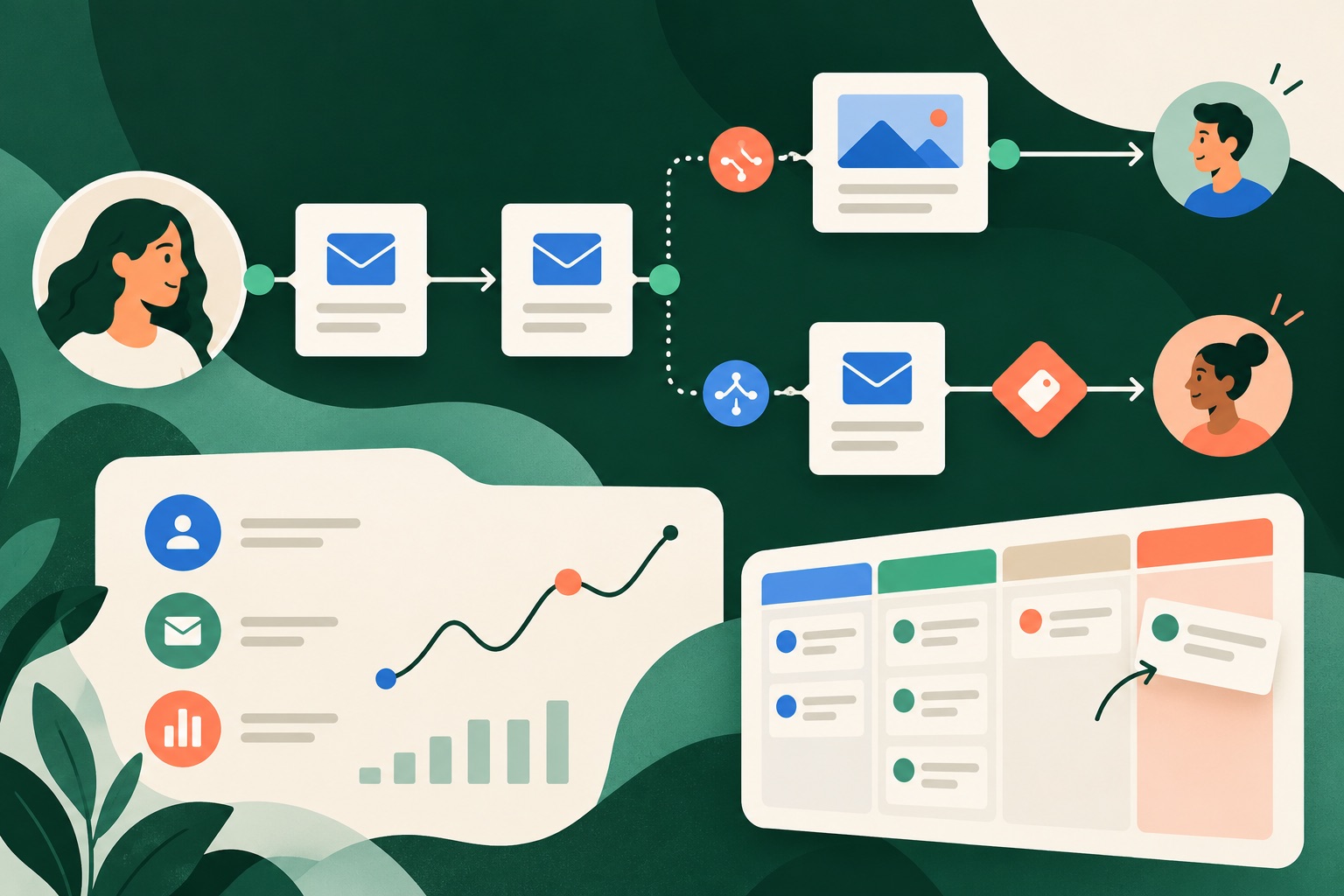
ActiveCampaign is a marketing automation platform built around customer journeys. Email campaigns, segmentation and automation connect with CRM and sales workflows, helping a team respond to what a contact does rather than only sending a scheduled newsletter. It is designed for businesses with repeatable follow-up processes and enough customer data to make those processes useful.
That capability is its reason to exist and its main trade-off. ActiveCampaign gives teams more control over triggers, branches and handoffs than a basic newsletter service, but someone needs to design, maintain and measure those workflows. If you will send only occasional broadcasts, much of the product can sit unused.
Who it is for
- B2B teams that need to nurture leads and hand qualified prospects to sales.
- Businesses with multi-step onboarding, retention or re-engagement programs.
- Marketers who want customer behavior, segments and CRM activity to drive email journeys.
- Growing teams that can assign an owner to automation strategy and ongoing upkeep.
Probably not for you if…
- You mainly want an inexpensive weekly newsletter sender.
- You have no clear lifecycle stages, customer events or follow-up process to automate.
- Your team needs a transactional email API first and marketing workflows second.
Key features
Visual marketing automation
Automation workflows can use triggers, conditions and actions to route contacts through tailored messages. The platform lists automation templates and supports campaign, sales and ecommerce scenarios, with limits depending on plan. This depth is useful when it replaces manual work or improves timely follow-up; it is unnecessary complexity if a single welcome email is your only automation.
Email campaigns and segmentation
Campaigns can use list and behavior data to target messages, test content and report performance. Segmentation is the connective tissue: it can make a welcome series differ from a renewal reminder, or keep sales messages away from customers who already purchased. The quality of outcomes still depends on clean data and carefully designed consent and suppression rules.
CRM and sales workflows
The CRM features connect marketing activity with deals and sales tasks. This can help small sales teams see which leads engage and coordinate follow-up without maintaining disconnected tools. Businesses with an established CRM should check the integration and decide which system will own contacts, deal stages and consent records before migration.
Cross-channel options
Depending on package and add-ons, ActiveCampaign supports channels beyond email, including SMS and WhatsApp. Availability and included allowances vary. Consider these channels only if they serve a defined customer journey, and price them separately when comparing vendors.
Pricing
ActiveCampaign offers Starter, Plus, Pro and Enterprise options, with plan features and price affected by contact count, billing term, currency and selected channels. The vendor’s current pricing page presents a contact-based plan selector and annual-billing options, so there is no single meaningful price for every business. Compare the required automation actions, user seats, CRM features and send allowance at your own list size using the official pricing page.
Pros
- Automation can coordinate complex lead nurturing and customer lifecycle journeys.
- CRM and sales tasks can connect marketing activity with follow-up.
- Segmentation and triggers support relevant messages rather than one-size-fits-all blasts.
- Can replace manual processes across email and sales when the workflows are well defined.
Cons
- More setup and ongoing maintenance than a basic newsletter service.
- Pricing depends on list size and feature tier, making a tailored quote essential.
- Teams may need training and a clear data model to avoid confusing automations.
- It is unnecessary overhead if you do not use its workflow depth.
Alternatives
- MailerLite for a simpler, lighter newsletter and landing-page setup.
- Brevo for combined marketing and transactional messaging with send-volume tiers.
- Mailchimp for a familiar general-purpose platform with broad integrations.
Verdict
Rating: 4.2/5. ActiveCampaign is a strong choice when email is one part of a measurable customer journey and automation can reduce missed follow-ups or repetitive work. Choose it for lead nurturing, lifecycle programs and CRM-connected processes. Before subscribing, map one real workflow and confirm the plan supports every trigger, action and user you need. If that exercise produces only a newsletter and a welcome email, a simpler platform will be easier to run.
Check the current price and what is included on the official site.