Coloring Book Creation: 20 Prompts
Prompts for developing original coloring-book themes, page concepts, line-art briefs and publishing copy.
Inside the pack
🤖 ChatGPT🤖 Claude🤖 Gemini
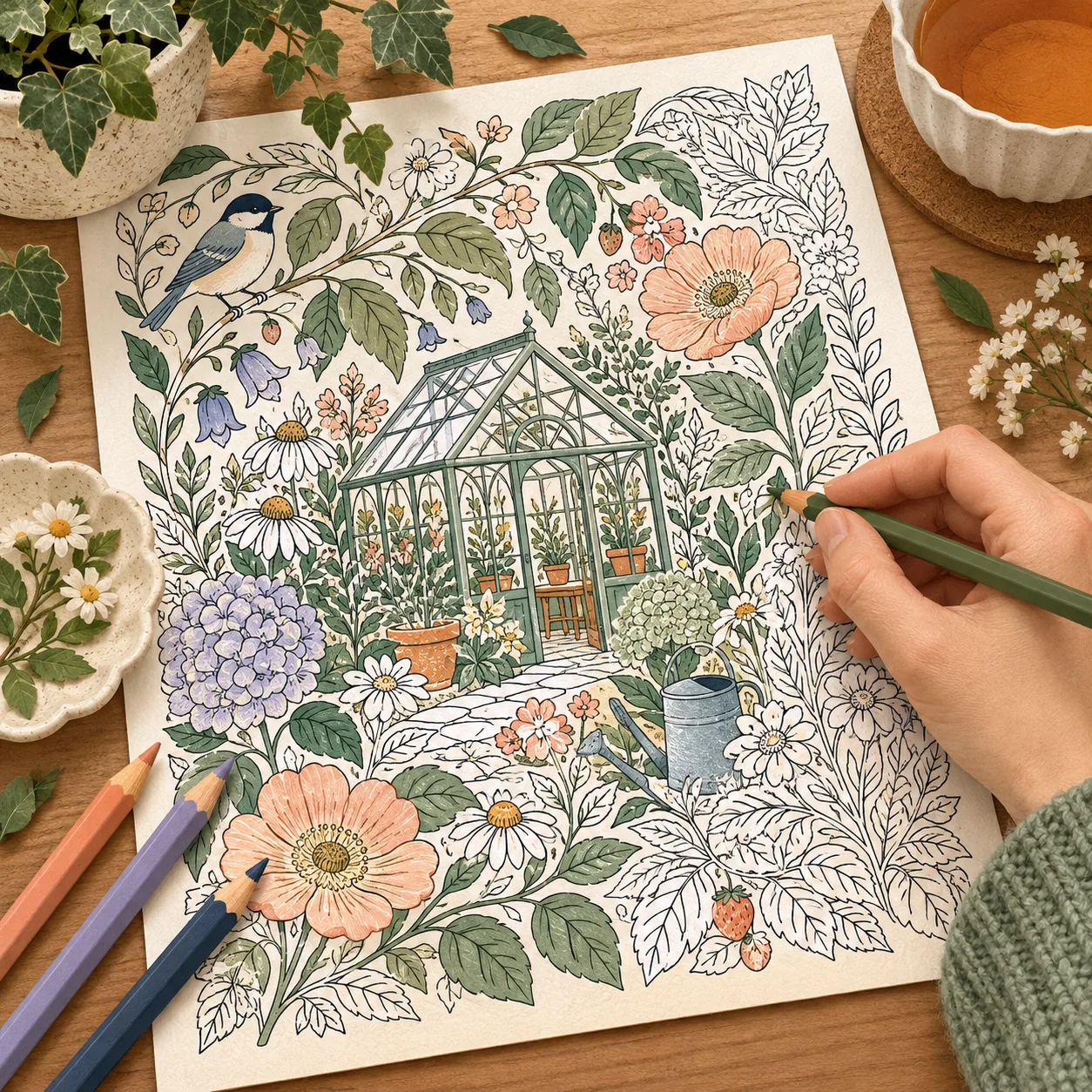
Replace bracketed details before using. Review generated art for originality, print clarity, age appropriateness and rights before publishing.
20 prompts
- Choose a focused theme. “Suggest 12 distinctive coloring-book themes for [audience] who enjoy [interest]. For each, give a clear promise, visual variety, likely difficulty and 10 possible page subjects. Avoid generic themes and copyrighted properties.”
- Define the reader. “Help me define the ideal audience for a coloring book about [theme]. Describe age range, interests, desired difficulty, page density, accessibility needs and what would make the book satisfying. Separate assumptions from facts.”
- Create a book concept. “Develop a complete concept for a [audience] coloring book titled around [theme]. Include positioning, tone, visual rules, page count range, variety plan and a concise originality check against common books in this niche.”
- Plan page variety. “Create a [number]-page content plan for a coloring book about [theme]. Rotate subjects, compositions and complexity. Avoid near-duplicates, keep a consistent visual world and identify pages that may need a simpler alternative.”
- Generate cozy scenes. “List [number] original cozy scene ideas for a coloring book about [theme]. Each should have one clear focal point, a few supporting details, an interesting silhouette and enough open space for coloring.”
- Design easy pages. “Propose [number] simple coloring-page concepts for beginners ages [range] about [theme]. Use bold, enclosed shapes, minimal background clutter and no tiny details. Describe exactly what appears in each composition.”
- Design intricate pages. “Propose [number] detailed coloring-page concepts for experienced adult colorists about [theme]. Include layered patterns and rich detail while preserving clear boundaries, balanced negative space and readable focal subjects.”
- Write an image prompt. “Write a production-ready prompt for one black-and-white coloring page: [scene]. Specify clean bold outlines, closed shapes, white background, high contrast and centered composition. No gray shading, gradients, color, lettering, border artifacts, signatures or watermark.”
- Keep a series consistent. “Create a visual style guide for a [number]-book coloring series about [theme]. Define line weight, detail level, page framing, recurring motifs and rules that keep pages recognizable but not repetitive.”
- Make a children’s page safe. “Review this coloring-page brief for children ages [range]: [brief]. Flag scary, unsafe or overly complex elements and suggest a friendlier version. Keep the subject engaging and suitable for the stated age.”
- Create mandala variations. “Generate [number] original mandala concepts inspired by [non-copyrighted theme]. Describe the central motif, repeating layers, symmetry and complexity. Ensure each design differs in structure, not just small decorations.”
- Develop seasonal pages. “Plan [number] original coloring pages for [season or holiday] that can be enjoyed by [audience]. Include a range of settings and activities, avoid relying on protected characters, and keep each page independently understandable.”
- Balance page composition. “Assess this page description for visual balance and coloring usability: [description]. Recommend changes to focal point, margins, detail density, enclosed regions and negative space. Do not introduce text unless requested.”
- Create a cover brief. “Write a cover-design brief for a coloring book about [theme] for [audience]. Include title hierarchy, central image, palette, contrast, thumbnail readability and space for author name. Do not make unsupported claims or add fake badges.”
- Draft the introduction. “Write a welcoming [word count]-word introduction for a [audience] coloring book about [theme]. Explain how to use the book in a relaxed, inclusive voice. Do not promise therapeutic or health outcomes.”
- Write listing descriptions. “Draft three accurate product descriptions for a coloring book with these verified details: [page count, size, audience, theme, single- or double-sided]. Use an inviting tone and avoid unverified claims, keyword stuffing and invented bonuses.”
- Brainstorm search phrases. “Suggest relevant search phrase ideas for a coloring book about [theme] for [audience]. Group by subject, audience and use case. Mark them as research ideas, not verified search-volume or ranking data.”
- Inspect generated pages. “Create a quality-control rubric for these coloring page images: [describe or attach]. Score line clarity, closed regions, clipping, accidental gray fills, stray marks, repetition, margins and suitability for [print size].”
- Check interior consistency. “Compare these page descriptions [paste list] against the style guide [paste guide]. Find inconsistent line density, repeated compositions, off-theme elements and missing variety. Return specific fixes by page number.”
- Prepare print checks. “Make a print-readiness checklist for a [trim size] coloring book with [page count] pages, [single/double-sided] printing and [color/black ink] interior. Include resolution, margins, bleed, page order, proof copy and current KDP specification checks.”
👑 Golden ruleClear Prompt = Clear Output 💜