Academy › AI-Assisted KDP Books › Lesson 2
KDP rules and AI disclosure
Understand the difference between AI-generated and AI-assisted content and what you must tell KDP. · 7 min read
Read this before you make anything. KDP has rules about content and about AI, and ignoring them can cost you a book or an account.
This is a summary of public KDP guidance as we read it; the policy is the authority and may change. This is not legal advice.
What you will build
A one-paragraph “AI use statement” for each book, and a habit of re-reading the rules before you publish.
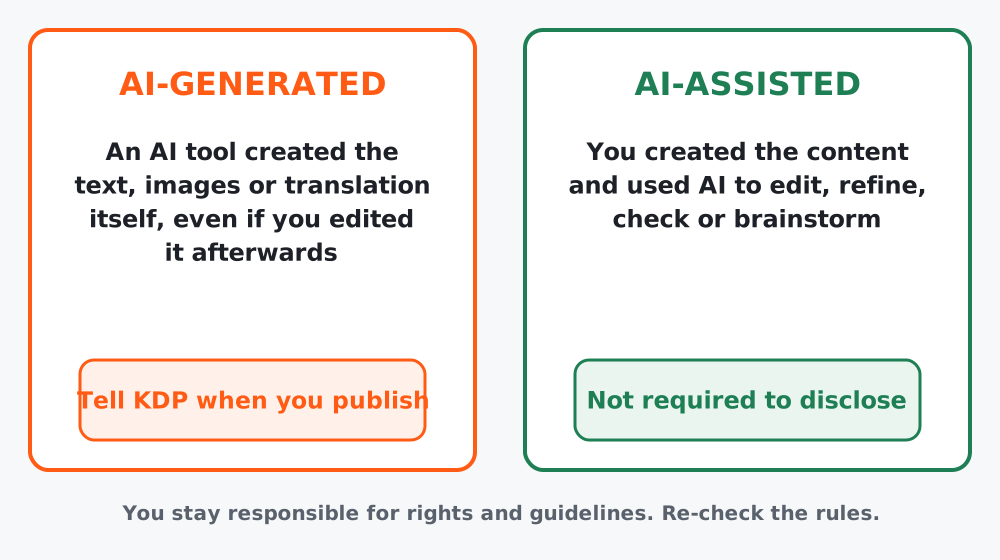 Figure 1. KDP’s current distinction, from its content guidelines.
What KDP says about AI content
In its content guidelines, KDP asks you to tell it when you publish a new book, or edit and republish one, that includes AI-generated content (text, images or translations, including cover and interior images and artwork).
- AI-generated: an AI tool created the actual text, images or translation, even if you edited it afterwards.
- AI-assisted: you created the content yourself and used AI to edit, refine, check or improve it, or you used AI to brainstorm and then made the content yourself. KDP states you do not need to tell it about AI-assisted content.
- You are responsible for checking that all AI-generated and AI-assisted content follows the content guidelines, including intellectual property rights.
Read the current text on the KDP content guidelines page.
Step 1: Classify what you will do
| What you do | Likely class |
|---|---|
| Claude writes the chapters; you edit | AI-generated text |
| You write; Claude fixes grammar and suggests clearer phrasing | AI-assisted |
| An image tool creates the illustrations | AI-generated images |
| You draw; AI suggests color palettes | AI-assisted |
| AI translates your manuscript | AI-generated translation |
When unsure, take the more cautious classification and read the policy text again.
Step 2: Write your AI use statement
Book: [title]
Text: [written by me | drafted with AI and edited | AI-assisted editing only]
Images: [drawn by me | AI-generated | licensed stock | mixed]
Translation: [none | human | AI]
KDP disclosure required: [yes | no] because [reason]
Checked against the content guidelines on: [date]
Keep it with the book’s files. It is useful if KDP asks, and for your own consistency.
Step 3: Other content rules to check
KDP’s guidelines also cover things like poor customer experience (misleading descriptions, disappointing content), public domain content, and intellectual property. Re-read the sections that apply to your format, such as low-content books, before you build.
Step 4: Rights for the inputs
AI tools can imitate styles, characters and brands. Do not use someone else’s characters, trademarks or distinctive artwork as prompts. For any AI image tool, check the terms for commercial use of outputs.
Worked example
An author used AI to produce a first draft and then rewrote most of it. Reading the definition, she classed the text as AI-generated because the tool had created the actual text, so she disclosed. A second author wrote everything and used Claude to find unclear sentences; that was AI-assisted.
Common mistakes
- Assuming heavy editing turns AI-generated text into “assisted”.
- Reading the policy once and never again.
- Using a character or brand in a prompt.
Checklist
- Each part of the book classified (text, images, translation)
- AI use statement written and filed
- Content guidelines read this week, with the date noted