Academy › AI-Assisted KDP Books › Lesson 8
Pre-publish QA and iteration
Run four gates before you submit, then collect feedback and improve the next edition. · 8 min read
Publishing is not the finish line. A careful last check prevents refunds, bad reviews and rejected submissions.
What you will build
A four-gate checklist and a post-launch improvement loop.
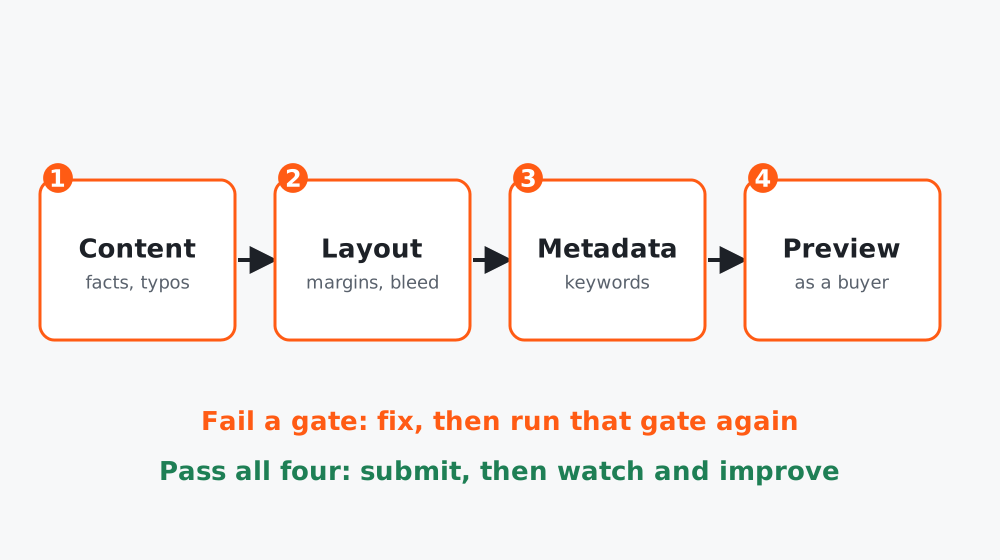 Figure 1. Fix, then run that gate again. Submit only when all four pass.
The four gates
| Gate | Check |
|---|---|
| 1. Content | Facts, typos, rights for every image and text, no claims you cannot support, AI use statement matches the book |
| 2. Layout | Trim, bleed, margins, page count, fonts, image resolution, spine, no content in unsafe areas |
| 3. Metadata | Title and subtitle, keywords, categories, description match the actual book |
| 4. Preview | KDP previewer clean, proof copy checked in hand, listing read as a buyer |
Use our 12-point KDP pre-publish checklist as the detailed version of these gates.
Ask Claude to review, then verify yourself
Review this book's metadata and description against the book's contents list.
List every statement in the metadata that the contents do not support.
Then list anything in the contents a buyer would expect to be mentioned
but is not. Do not rewrite.

CONTENTS: [paste]
METADATA: [paste]
Claude can catch mismatches; you must still check the files, the previewer and the proof copy.
Re-read the rules
Before you submit, re-read KDP’s content guidelines, especially the AI-generated content section, and confirm your AI use statement and disclosure answers are correct.
After launch: a small improvement loop
| Week | Do |
|---|---|
| 1 | Read every review and customer message; note the exact words |
| 2 | List what buyers praised and what they asked for |
| 3 | Fix factual errors and update the files; update metadata if the buyer language is different |
| 4 | Decide: improve the edition, make a companion, or stop |
Compare results across books you publish, with the same simple notes each time. Avoid conclusions from one or two sales.
Worked example
A puzzle-book author found a repeated review comment: “Pages are too thin to color on both sides.” That was a layout and design decision (single-sided pages), not a marketing problem. The second edition used a blank back page behind each puzzle and a note in the description.
Common mistakes
- Rushing past the proof copy.
- Changing the description to chase sales rather than to be accurate.
- Reading feedback emotionally instead of as data.
Final checklist
- All four gates passed
- KDP rules re-read, AI use statement matches
- Proof copy checked
- Improvement loop on the calendar
If you want ready-made prompts for the steps in this course, see our coloring book prompt pack and kids KDP prompt pack, and our Greenlight Publish review for a pre-publish checking tool.
Back to: Course overview