Academy › Automation Marketing with Claude › Lesson 8
Add QA gates and roll out safely
Measure quality, catch risky output before it ships and decide whether to keep, revise or stop the workflow. · 9 min read
A reliable workflow is more than a good prompt. It needs a clear quality bar, a way to catch errors and an owner who can stop it. Roll it out to one asset type first, learn from real corrections, and expand only when the evidence supports it.
What you will build
A quality gate and a 30-day rollout plan for one recurring marketing workflow.
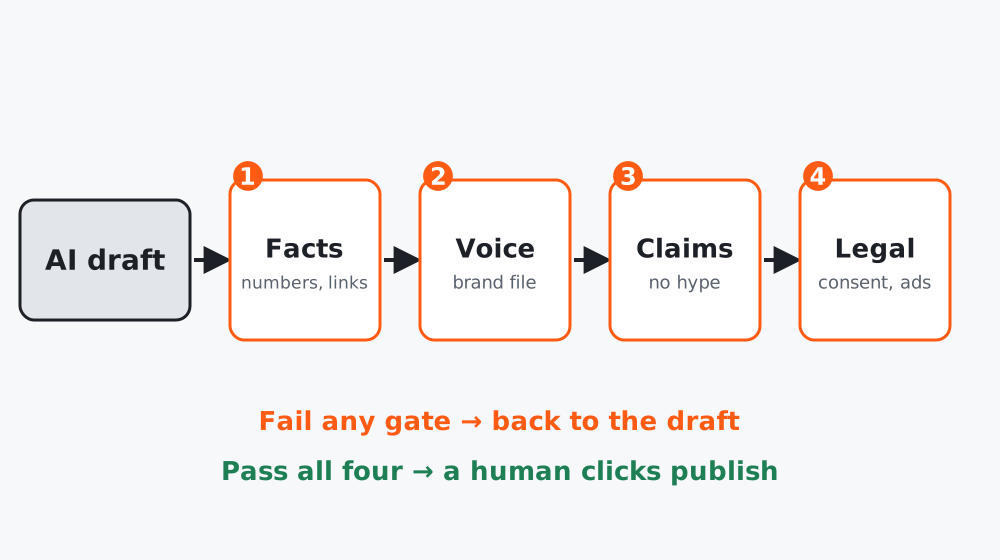 Figure 1. Catch problems at the earliest useful stage; high-risk actions need a human decision.
Step 1: Define what “ready” means
Write a short pass/fail checklist for the asset. For an email draft, that might include:
- Every offer, date and link matches the approved source.
- Claims have evidence or are removed.
- The intended audience and CTA are clear.
- The copy follows the voice guide and has no placeholder text.
- A reviewer has approved the final version.
Do not score style as if it were objective. Ask the reviewer to flag concrete issues, such as a wrong link or unsupported claim, and keep subjective preferences in a separate notes field.
Step 2: Add a QA prompt
Review this draft against the approved source and checklist.
Do not rewrite it yet.

Return a table with: check, pass/fail/uncertain, evidence in the source,
and exact issue. Flag unsupported claims, mismatched dates or prices,
broken links, missing placeholders and any text that needs human judgment.
If the source does not prove a claim, mark it uncertain rather than guessing.

Approved source:
[paste facts]

Checklist:
[paste the team's pass criteria]

Draft:
[paste the draft]
Treat this as a second review aid, not as final approval. A model can miss its own errors; a person still checks facts and external actions.
Step 3: Track a small scorecard
For each run, log whether the output was usable, the minutes saved, the number and type of corrections, and whether a stop condition fired. Include a sample of “no issue” runs so the team can spot false confidence as well as obvious mistakes.
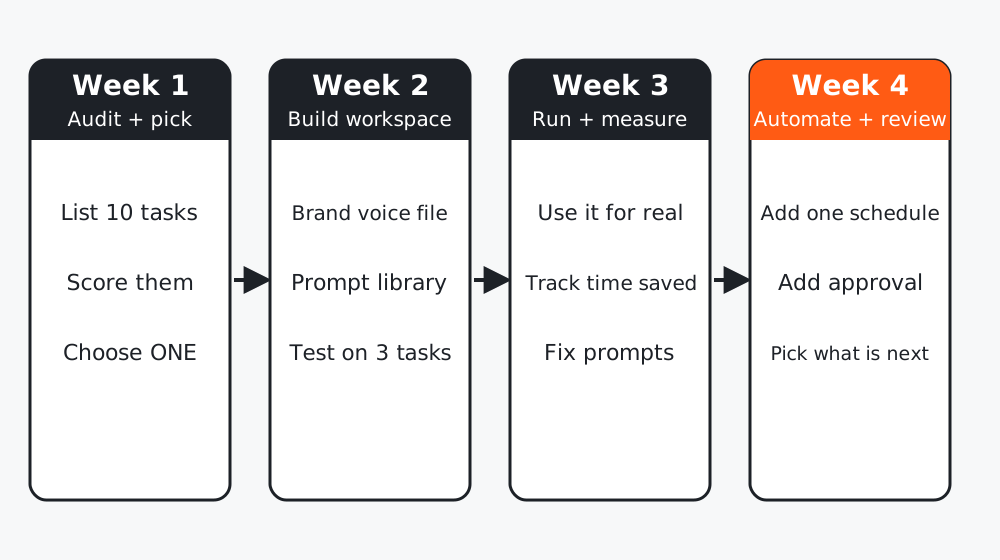 Figure 2. Expand only after a supervised pilot meets the team’s quality bar.
A simple 30-day rollout
| Period | Work | Decision |
|---|---|---|
| Days 1–7 | Record the current manual time and quality baseline | Is the task frequent and low-risk enough? |
| Days 8–14 | Run the prompt manually with human review | Are inputs and instructions clear? |
| Days 15–21 | Use a supervised schedule for drafts only | Are stop conditions and approvals working? |
| Days 22–30 | Review the run log and sample outputs | Keep, revise, expand narrowly or stop |
Common failure modes
- No baseline: “faster” cannot be measured. Record current effort first.
- Silent input changes: version the source fields and review prompt changes.
- Approval by habit: require an explicit reviewer action; a draft being generated is not approval.
- Scope creep: do not add sending, publishing or customer-data access just because the first draft worked.
Checklist
- Pass criteria are written in observable terms
- QA output points to source evidence and marks uncertainty
- Runs, corrections, time and stop conditions are logged
- A person owns the workflow and can pause it
- Expansion depends on the 30-day review
Course complete: Use the course overview to revisit any workflow.